Anglo-Celtic Plate Recap & Updated GB 100 Km Rankings
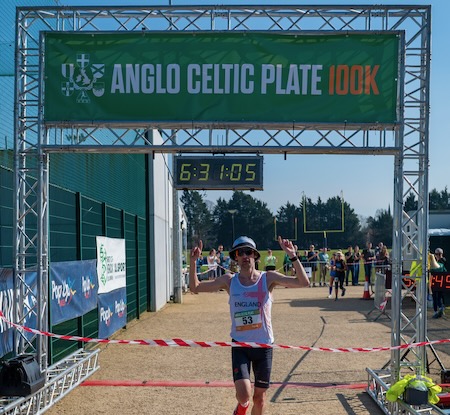
Dave Barratt wins ACP 100 Km Limerick, 2026 Pic-Chris Sutherland,
I have mentioned before in previous posts that there was a buzz around 100km as an event in the UK. The 2026 Anglo-Celtic Plate, in Limerick last weekend (21.03.2026) again reinforced that.
I have mentioned before in previous posts that there was a buzz around 100km as an event in the UK. The 2026 Anglo-Celtic Plate, in Limerick last weekend (21.03.2026), again reinforced that.
In the UK and Ireland, running 100km on the road is considered a fairly niche event.
The lure of the trails is a big pull for many,with various sponsors, sports companies and high profile race organisers harnessing social media and creative PR to lure us on adventures in scenic places. Who can argue with that? Most of us have memories, if not of a race, then of a training run, where the scenery and atmosphere in a special place left us mesmerised.
So why run 100km on the road, sometimes on a small loop in a park too!
Why not, some would say? Along with 50km, they are the two classic ultra distances, recognised by World Athletics for records and rankings purposes.
Unlike trail races, but like the marathon, courses can be accurately measured by qualified course measurers to certify a bona fide accurate distance that can be compared with other 100k races around the world.
This cannot be done for mountain nd trail races, but most runners who run on the trails know and appreciate that, leaving learned minds to come up with various formulas and points systems comparing distance and overall elevation to rank athletes.
The lure of the classic 100km distance is, for some ultra-runners, like the lure of the marathon. A classic empirical distance that can be put in a box and quantified. Then compared against your friends and peers.
If one word could sum up 100km on the road,in one word, it is INTENSITY.
Many years ago, I recall a brief conversation with Mike Hartley. His name may be familar to some as the long-time record holder of the 268 Mile Pennine Way, FKT, until Damain Hall and John Kelly developed a more recent love-affair with that trail and between them have lowered Mike’s time in recent years.
Competitive trail races, back in the 1980’s, were very few. As well as creating his own adventures in the hills and trails, Mike also tackled a few 100km races, and his best time of 6:37:45 still ranks him highly in the all-time GB rankings.
I asked him what he felt was the difference in running a long trail adventure, compared to a 100 km on the road. He replied to the effect that both were credible challenges, but 100km had a definite intensity to it. He likened the fact that if you were out on a trail with some friends and had to take a comfort break or tie your shoelaces, people would wait or slow down to allow you to catch up. If you did that in a 100km race, your fellow runners would be half a mile up the road in the time you stopped for that little pit stop. That sums up well the intensity and the challenge that 100km offer.
The recent Anglo-Celtic plate in Limerick was no exception at the very sharp end. It is indeed a race for the committed.
You can read my Athletics Weekly (AW) report on how the race unfolded HERE
Once again, the event brought together teams from the four home nations and Ireland in friendly but “Intense competition” for the Anglo-Celtic Plate. Add to the mix some experienced ultrarunners and one or two first-timers, and the ingredients were there for fast times to be achieved.
WOMEN’S RANKINGS
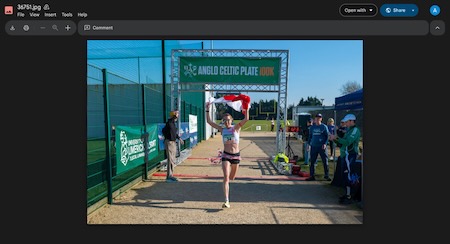
Katie Young Wins Anglo Celtic Plate 100km,Limerick, Pic Chris Sutherland Lomond Photography
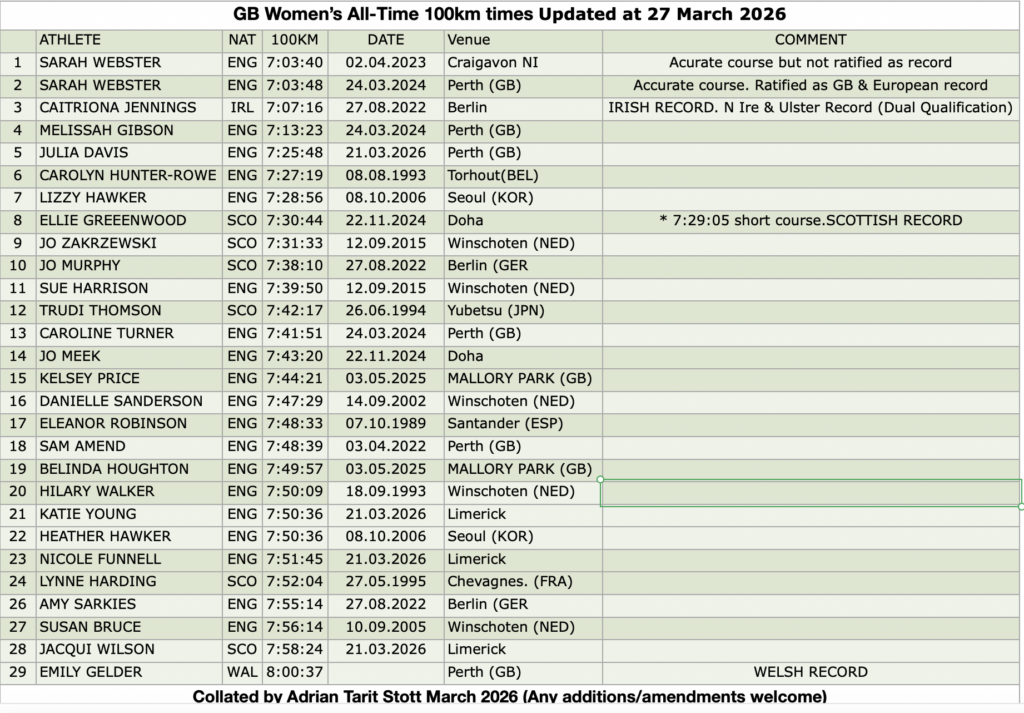
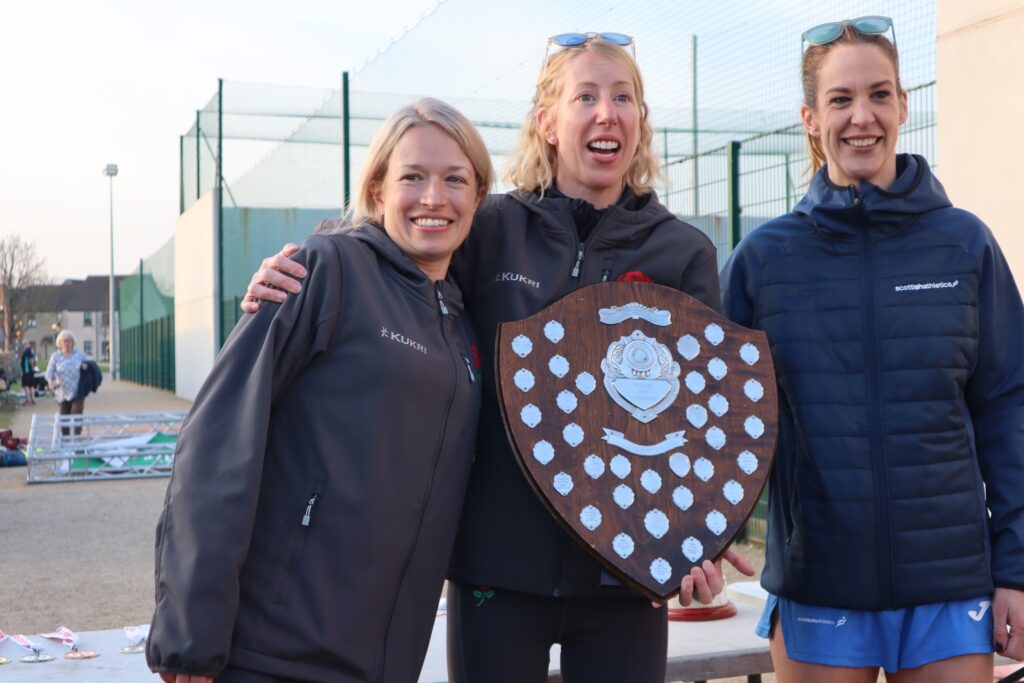
In the women’s race, the first three finishers, Katie Young, Nicole Funnell and Jaccqui Wilson, all posted times that enabled them to join the Sub-8 100km club. Young and Wilson both greatly improved on their times on the challenging Mallory Park course in 2025. For Funnell, it was her first road 100km, though unlike Barratt and Almond, she has proven herself to be a very competent competitor in ultra-trail events and has marathon road experience.
GB. Women’s All-Time 100km times to 8 hours.
NOTE; Only athletes best times listed. Some athletes have multiple times below 8 hours
GB Women’s Podium at Limerick L-r Nicolle Funnell, Katie Young, Jacqui Wilson. Pic John O’Regan
MEN’S RANKINGS
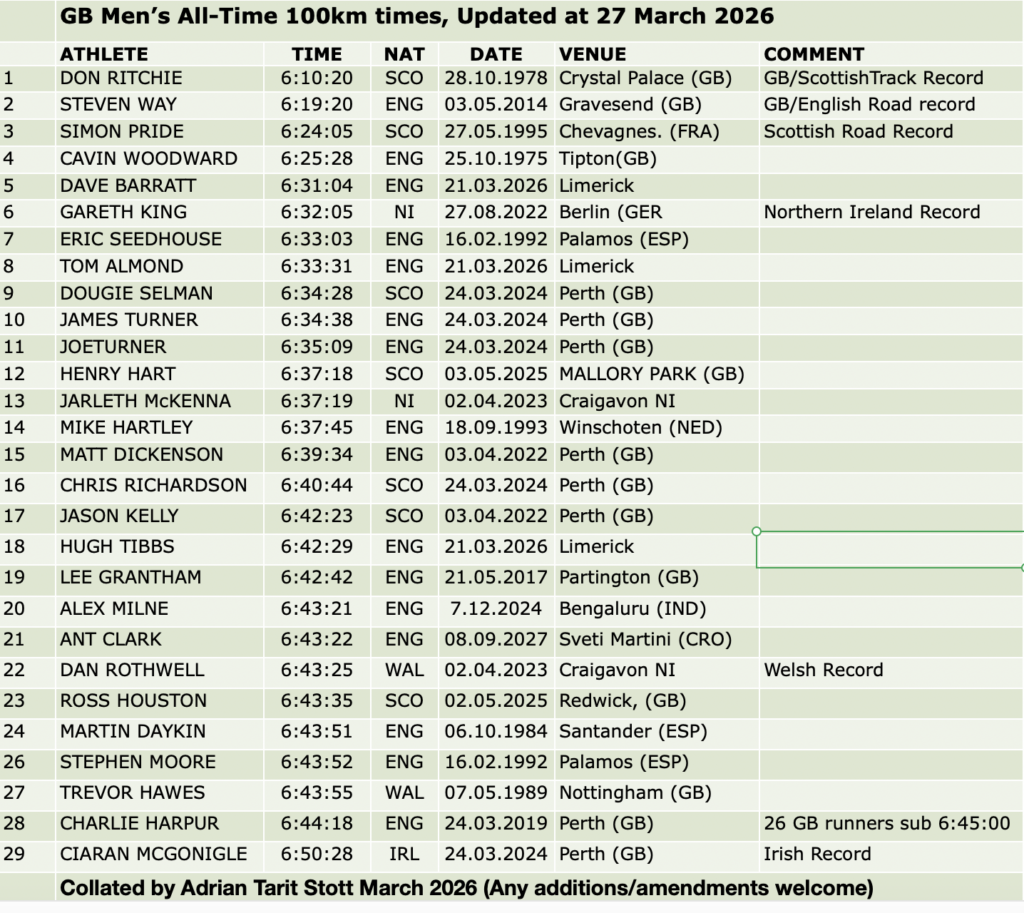
In the mens race, Dave Barratt and Tom Almond, both running their first 100km races, excelled. Barratt, whose longest previous race, to our knowledge, had only been a 50km, and Almond, only a marathon. (Please leave a comment below if you know differently.)Their finishing times of 6:31:04 and 6:33:29, respectively, now place them in 5th and 7th, respectively, on the GB all-time rankings list. 3rd place Jarlath McKenna, who has shown remarkable consitency at 100km and the trail in recnet years was only 30 seconds, outdide his PB with 6:37:47. Hugh Tibbs, with much experience on the trails, also showed resilience to close out a 6:42:29 in his first 100km to put him in the top 20. In Barratt and Almond’s case , maybe their innocencce of the 100k, and ultra’s in general, protected them, for they both showed no fear for the distance and seemed very strong in the final 10-15 km as other more experienced runners slowed or were forced to retire.
NOTE; Only athletes best times listed. Some athletes have multiple times below 6 hours 45 Minutes.
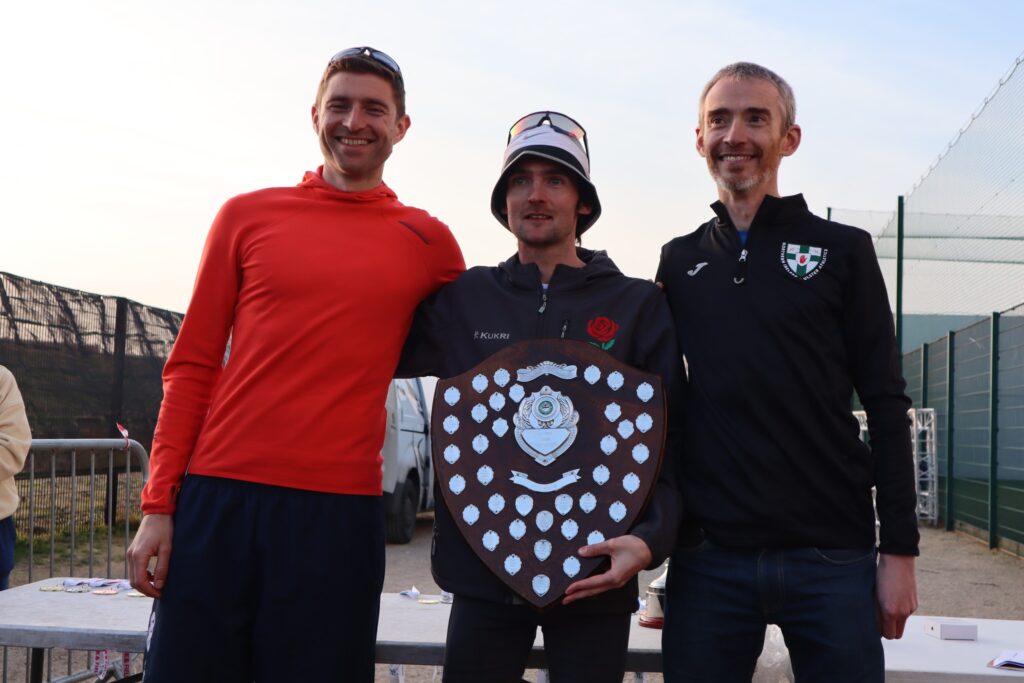
GB mens 100km Podium at Limerick. l-r Tom Almond , Dave Barratt, Jarlath McKenna. Pic John O’Regan
Many PB’s were set throughout the field by both experienced and newbie 100k runners. With the Limerick location, it was also good to see a noticeable rise in standards in both the Irish and Northern Ireland and Ulster teams.
Although 100km on the road will never attract the growing number of people who take part in trail races, it still offers a unique challenge for anyone.
At the very sharp end, the Anglo-Celtic plate also offers an opportunity as a stepping stone from Home Countries representation to Full GB and NI or Irish representation on a world or European stage.
In a global context, although still early in the year with few 100km races held yet, as I write this at the end of March, the Limerick results hold up well. Only the Swiss athlete, Pascal Rueger, has run faster this year with his speedy 6:18:27 in Italy on the 21st of February.
Barratt, Almond, McKenna and Tibbs currently have the next four fastest times for 2026 so far. Times that would have looked respectable, in any of the recent, end-of-year, global lists.
For the women,Sarah Webster, although choosing not to run in Limerick, leads the world rankings so far with her 7:03:48, run in the same Italian race. There were other fast women’s times in Italy, from Finland’s Noora Honkala and Norway’s Annette Sands. There were fast times too at the recent Slavonski Brod race in Croatia from local runners, Nicolina Sustic and Veronika Jurassic. The Limerick women’s podium then fills the next three places.
Full results from the 2026 Anglo-Celtic Plate 100km can be found HERE
Full results from the 2026 Anglo-CelticPlate 100km can be found HERE
Thanks for reading. If you have enjoyed this post, do see our other ones HERE
If you have a comment, please feel free to add it below.
If you are inspired by this, or think someone else you know will be, please do what you have to do by sharing. You all know how these things work by now:-) You can also follow me on Twitter and Instagram @tarittweets
Sign up to receive our newsletter alerting you tonew posts
Adrian Tarit Stott.
The author is a former GB 24-hour ultra international with over 100 ultra race completions. He has also been involved in organising ultra-distance races for over 30 years. Still an active recreational runner, he is currently a member of UKA’s Ultra Running Advisory Group (URAG) and the Mountain and Trail Advisory Group. He also contributes as part of the selection and team management for both Scottish and GB ultra teams. A freelance writer in his spare time, he contributes articles and reports to several websites and magazines including Athletics Weekly and Irunfar.